





Agritrax.com
  • Home

Best Sellers

  • Patent Pending

Main Menu

  • Home
  • Agricultural Trends
  • Algae Products
  • Alternative Energy
  • Container Gardening
  • Food Traceability Technology
  • Global Warming
  • Metal Detecting
  • Patents and Trademarks
  • Precious Metals
  • Windmill Energy
  • Remote Sensing
  • Grow Tomatoes
  • Grow Grapes
  • Hydroponics Guide
  • Organic Foods Guide
  • Ravens Design Shop

Organic Gardening Ebook

Growing Grapes at Home

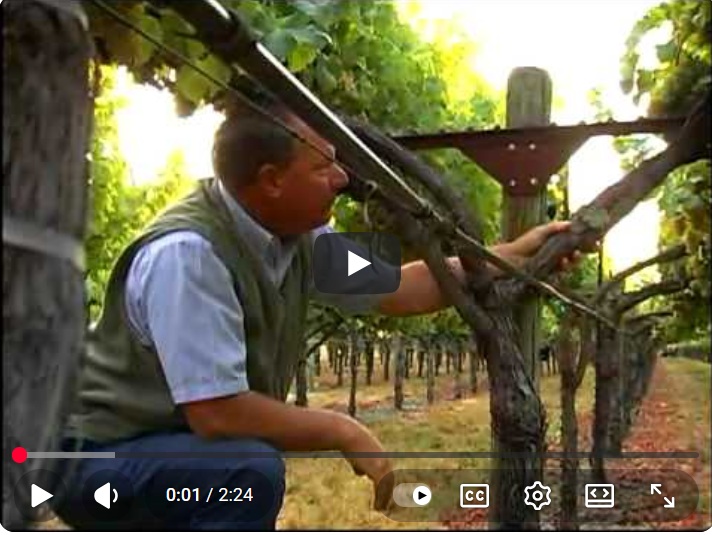
growing grapesGrowing grapes at home in your green house is not that much different from how they are grown in a large vineyard. The only real difference is space. There are several facets to growing healthy grapevines that need to be considered by both large vineyards and the home grower. The most important aspect of all these is tending to the vines. This will entail soil preparation, water, sunlight, pruning, and pest control. For many home grape growers, it is the pruning and the pest control that can be the most tedious.

Put simply, pruning is cutting away plant growth to encourage more growth. How the grapevine is pruned depends a lot upon the type of grapes that are being grown. Since hybrid grape varieties were developed to be hardier during the winter and more resistant to diseases, they tend to produce less foliage then the traditional types of grapevines. Grapevines need to be pruned to remove the previous years fruiting canes or spurs. Grapes are only produced on shoots growing from one-year-old canes. Therefore, healthy new canes must be produced by the vine every year. If too much of the vine is pruned back, more shoots will grow on the vine, which in turn, produces more crop and foliage. But this is actually a disadvantage since increased foliage on a vine results in a shady canopy, and this provides a bad environment for the fruit to ripen. The home grape grower has to be careful when pruning to avoid any unnecessary injury to the plant. When removing year-old shoots, a hand pruner can be used effectively. Larger wood on the vine should be cut with either a lopper or a handsaw.

The home grape grower spends a lot of their time dealing with pests like insects, birds and even deer. There are a large number of insects, like grape berry moths, grape leafhoppers, Japanese beetles, and rose chafers that would love to dine on a delicious grapevine. Insecticides can be used to control insect infestation but typically, grapevines can withstand a small amount of insect damage. It is only necessary to control insects when a large portion of the leaf area or the fruit itself is threatened.

Birds, on the other hand, can be much more destructive. A flock of birds can devastate a crop of grapes but, on the bright side, a large flock of birds is easier to scare away than individual birds. Home grape growers can control birds by installing a physical barrier, like a net, over all of the vines. But it has to be taken down before the winter or ice could form on it and damage the vines. Home grape growers can also use visual repellents such as aluminum pie plates, artificial hawks, owls, or snakes. Odor repellents are something that are very effective when it comes to controlling deer. In early spring when shoots are just emerging from the vine and food sources are scarce, home grown vineyards are extremely tempting for the deer. Home grape growers can also use the scent of a human, dog hair, or soap to scare off unwanted birds. Additionally, the scent of coyotes can also be used since coyotes are natural predators to deer.
Growing Grape Related Articles

  • Grape Growing
  • Growing Grapes at Home
  • How to Grow Grape Vines in the Right Soil
  • How to Plant and Grow a Successful Grape Vine
  • How to Tend to a Grape Vine Growing on a Trellis
  • The Best Grapes for Growing a Successful Vineyard

The Best Grapes for Growing a Successful Vineyard

Under the California sunlight is not the only place where you can grow a successful vineyard. Nowadays, you can grow grapevines just about anywhere. Since grapevines are naturally adaptable, even areas with extreme climates are now considered suitable for grape growing. Beginners should start off with a grape variety that does particularly well in their particular area or growing zone.

When deciding on a grape variety, remember that your location will have everything to do with your grape growing experience. Did you know that a grape variety that is grown in California will taste much different than that same variety grown in France? That is because soil and weather conditions contribute to the wines specific personalities. You can find out which varieties of grapes grow well in your area by talking to local vintners.

There are over five thousand different types of grape varieties including hybrids. Grape growers who live in areas where the growing season is shorter are limited to the hybrid grape varieties. Grapevines have been bred to last through cooler climates and to be more resistant to disease. But, it is the climate condition in your area that will mostly determine the varieties of grapes that you can grow successfully. Although grape hybrids can grow in cooler conditions, not every grape variety flourishes in every region of the world. You will still need to know the length of your growing season to determine what variety of grape will work best for you. The growing season is the average number of frost-free days. Some of the different grape varieties require longer growing seasons to fully ripen.

Wine grapes are all the same species known as vitis vinifera. However, within this species, there are hundreds of cultivars that vary in their characteristics. Vitis vinifera grapes are used for the production of wine because they have a tight skin perfect for making wine. It is the species that yields over ninety-nine percent of the world’s wines.

There are also red grapes and white grapes. Both types can be used to make wine. Some red grape varieties include Merlot, Cabernet Sauvignon, and Syrah. Some of the white grape varieties include Chardonnay, Riesling, Sylvaner and Chenin Blanc. Vitis vinifera grapes come from the Mediterranean region, southwestern Asia, Spain, and central Europe. American grapes originated from the Vitis labrusca, and are found in Canada and the eastern United States.

Wine grapes are smaller in comparison to other types of grapes and usually seeded. They have thick skins, which is what is why they are so desirable since much of the aroma in wine comes from the skin. The grape species that are used for wine also tend to be very sweet. When these grapes are harvested, their juice is about twenty-four percent sugar by weight.

And while seventy-one percent of the world’s grapes are used for making wine, there are many other reasons to grow grapes. Grapes are also used for eating and as a dry fruit. They can be made into jelly, vinegar, candy, grape seed extract, seed oil, and jam. 

Growing Grape Related Articles

  • Grape Growing
  • Growing Grapes at Home
  • How to Grow Grape Vines in the Right Soil
  • How to Plant and Grow a Successful Grape Vine
  • How to Tend to a Grape Vine Growing on a Trellis
  • The Best Grapes for Growing a Successful Vineyard

  1. How to Grow Grape Vines in the Right Soil

Page 2 of 3

  • 1
  • 2
  • 3
  • Privacy Policy
  • Terms of Service
  • Disclaimer
  • Help Desk